
双耀
The Core Impact of Fluid Contaminants on the Service Life and Operational Stability of High-Pressure Plunger Pumps
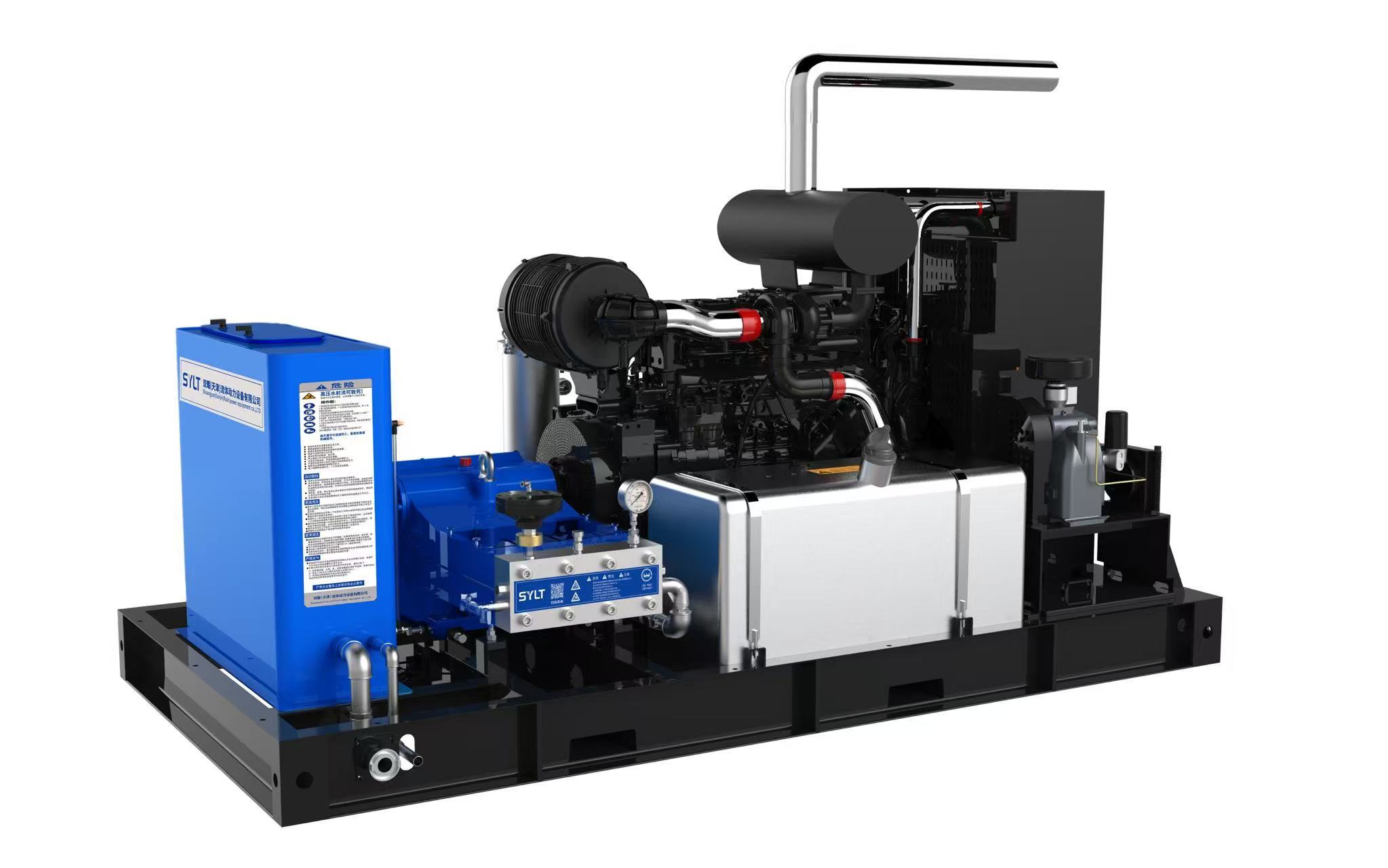

High-pressure plunger pumps are widely used in industrial cleaning, pipeline maintenance and operation, mining and industrial applications, and many other scenarios. Their continuous, stable operation is a critical foundation for maintaining production efficiency and minimizing downtime losses. In real-world field applications, the majority of equipment wear, frequent failures, and performance degradation are not due to inherent quality defects but rather to various impurities present in the process fluids. Sediment, suspended particles, and fine hard contaminants can cause persistent, cumulative abrasion to the pump’s internal components during prolonged cyclic operation. Many users focus on equipment selection and routine startup procedures while overlooking the crucial role of fluid cleanliness. Over time, this leads to a steady decline in overall equipment condition, rising maintenance costs, and significant disruptions to regular operational schedules. Therefore, recognizing the comprehensive detrimental effects of impurities on high-pressure plunger pumps and implementing effective upstream filtration is essential for extending equipment life and ensuring consistent, reliable performance.
Impurities in the fluid can cause irreversible wear and damage to several critical components of a high-pressure plunger pump, affecting multiple key operating parts. First, the sealing assemblies are impacted: impurity particles continuously rub against and abrade the sealing surfaces, leading to surface wear and reduced sealing conformity, which in turn results in common issues such as leakage and insufficient pressure. Meanwhile, the reciprocating plunger elements remain in constant contact with the impurity-laden fluid; hard particles gradually polish the surface, degrading its smoothness and increasing clearance between moving parts. This directly causes unstable pressure output and diminished performance. In addition, internal flow passages and inlet/outlet ports within the pump housing are subjected to continuous erosion by impurities, causing deformation and degradation of the originally well‑defined flow paths. Consequently, fluid transport becomes obstructed, compromising the equipment’s fundamental operational integrity from multiple angles.
Long-term operation with impurity‑laden fluids not only accelerates component wear but also triggers a cascade of secondary failures, significantly increasing the burden on equipment maintenance and operations. Even minute impurities readily accumulate and clog gaps within the pump housing, flow passages, and joint interfaces, obstructing internal fluid circulation and sharply raising operating resistance. This directly leads to increased equipment load, higher energy consumption, and a marked decline in operational efficiency, turning what was once an efficient process into a slow, labor‑intensive one. Meanwhile, impurity buildup and component wear create a vicious cycle: debris shed from worn parts becomes entrained in the fluid, further exacerbating internal losses and driving up the frequency of equipment failures. As a result, not only do operators face frequent replacements of vulnerable components, but unexpected shutdowns and equipment stalling become commonplace, severely delaying construction and production schedules and escalating both time‑related and material costs for the enterprise.
To ensure the long-term, stable operation of high-pressure plunger pumps and reduce maintenance costs, the key is to prevent the continuous wear caused by fluid contaminants. In daily use, simple yet effective upstream protection can significantly minimize equipment degradation—for example, installing robust fluid filtration systems, regularly cleaning accumulated debris inside the pump housing, and routinely inspecting the wear condition of critical components. Maintaining the cleanliness of the working fluid helps minimize wear and blockages in core parts such as plungers, seals, and flow passages, ensuring consistent pressure output and reliable operation. By implementing basic contamination control and performing regular preventive maintenance, you can not only extend the overall service life of high-pressure plunger pumps and substantially cut down on future repair and replacement expenses, but also keep the equipment running efficiently, providing stable and dependable support for a wide range of industrial applications.

The 17th China International Powder Metallurgy and Hard Alloy Exhibition
The 2025 17th China International Powder Metallurgy and Hard Alloy Exhibition from March 10-12, 2025, at the Shanghai World Expo Exhibition and Convention Center, Hall H1, B425. We welcome guests to visit.
"Private custom" product design, reliable and durable finished products
"Private custom" like product design, reliable and durable finished products, professional and timely after-sales service. It is the "three basic concepts" that the company adheres to from the beginning until today ".
Experienced market research team, independent product development concept
We have experienced mature market research team, independent product research and development concept, professional design and manufacturing technology so that the company's products can be adjusted according to the specific requirements of customers timely design
Contact CONTACT
Address: No.2 Road, Xiaodian Town Industrial Zone, Beichen District, Tianjin


Copyright©Shuangyao (Tianjin) Fluid Power Equipment Co., Ltd.