双耀
Advantages and disadvantages of a high-pressure plunger pump (horizontal type)
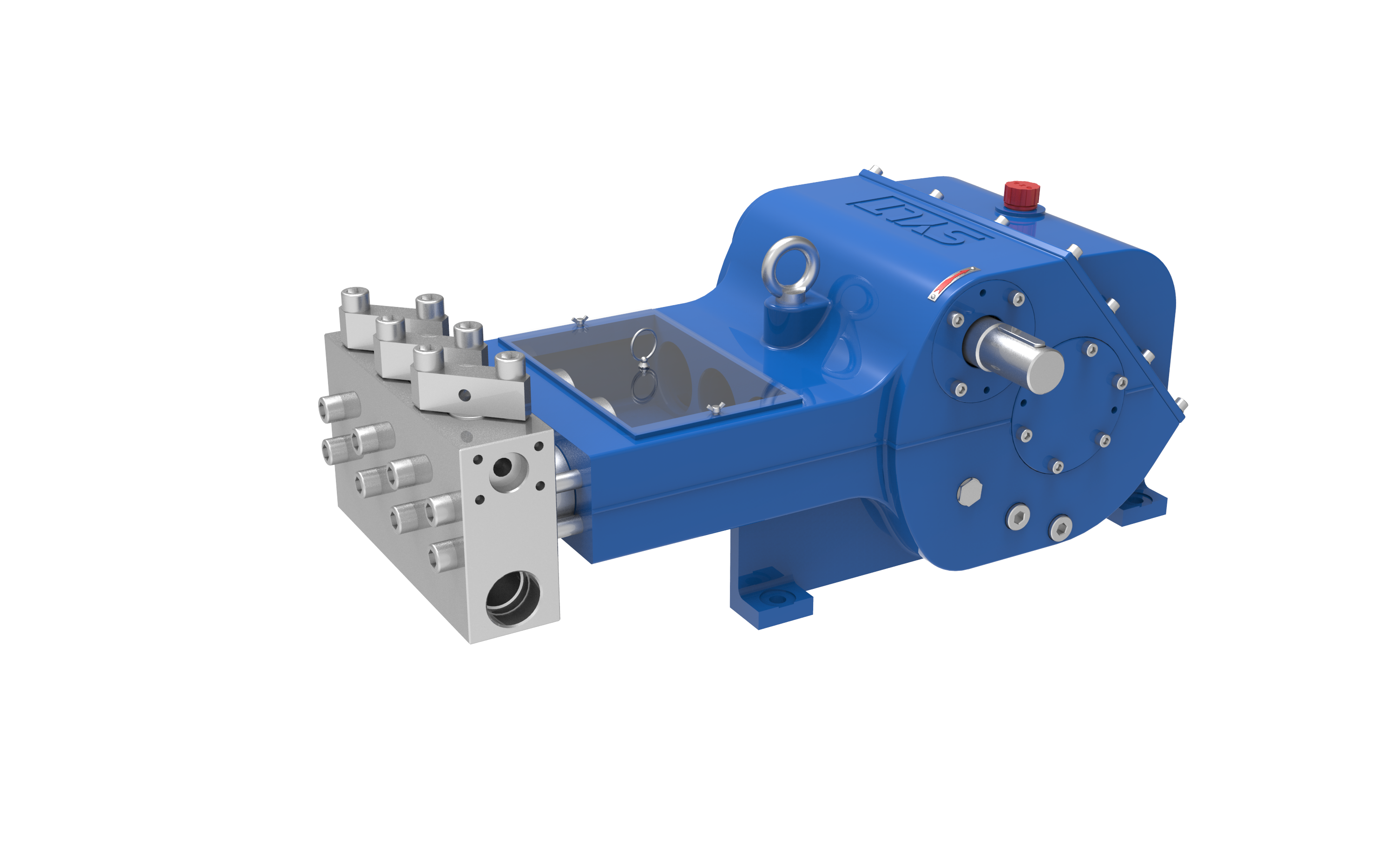
Advantages and Disadvantages of Horizontal High-Pressure Plunger Pumps
I. Advantages
1. High Operational Stability
- Structural Advantages: The horizontal layout lowers the center of gravity, provides even bearing support, reduces vibration during operation, and is suitable for high-speed, high-power applications (such as oil fracturing pumps).
- Impact Resistance: It can withstand continuous impacts of high pressure (100~150 MPa) and high flow rate (100~3000 L/min), suitable for ultra-high-pressure water jetting, oilfield fracturing, and other harsh working conditions.
2. Strong Medium Adaptability
- High-Viscosity Media: The horizontal flow path design can effectively transport high-viscosity liquids (such as asphalt, resin), avoiding blockages caused by excessive flow resistance.
- Media Containing Particles: Suitable for handling slurries, ore pulps, or chemical slurries containing solid particles. Some models use cemented carbide valve groups or ceramic coatings to improve wear resistance.
3. Convenient Maintenance
- Horizontally Split Structure: The pump cover can be quickly disassembled, facilitating the replacement of valve groups, seals, or plungers, and reducing downtime.
- Easy Accessibility: Key components such as bearings and couplings are exposed, making daily inspection and lubrication operations more convenient.
4. Expandability and Flexibility
- Multi-Pump Unit Design: Multiple pump heads (such as three-cylinder or five-cylinder pump units) can be connected in parallel horizontally to meet high flow rate requirements, satisfying large-capacity scenarios such as oil fracturing.
- Pipeline Layout Compatibility: Horizontal installation facilitates direct connection to the factory's horizontal pipeline system, reducing the need for elbows or reducers.
5. Long Service Life Design (Under Specific Conditions)
- High-Pressure Resistant Materials: Using tungsten carbide plungers, ceramic-coated cylinder liners, etc., it can maintain a stable service life even under ultra-high-pressure conditions.
- Modular Replacement: Worn parts (such as valve groups) can be replaced individually, reducing overall maintenance costs.
II. Disadvantages
1. Large Footprint
- Space Requirements: Horizontal layout requires a larger installation space and is not suitable for confined environments (such as vehicle-mounted equipment, ship cabins).
- Foundation Requirements: Requires space for horizontal pipeline connections, which limits the flexibility of factory layout to some extent.
2. Limited Suction Capacity
- Cavitation Risk: The suction head is generally less than 5 meters, relying on inlet pressure or requiring a booster tank, increasing system complexity.
- Sensitive to Liquid Vaporization: Under high-temperature conditions, insufficient suction head can easily lead to liquid vaporization, requiring additional cooling or pressurization measures.
3. Wear Problems
- Unilateral Wear: When the plunger moves horizontally, it is affected by gravity, which can easily lead to unilateral wear of the cylinder liner. Regular adjustment of the concentricity or replacement of parts is required.
- Maintenance Frequency: When operating in media containing particles, wear is aggravated, and the maintenance cycle may be shortened (e.g., mine slurry pumps require inspection every 3 months).
4. Higher Initial Cost
- Structural Complexity: Requires reinforced bearings, seals, and support structures to withstand high pressure and radial loads, resulting in higher manufacturing costs than vertical pumps.
- Material Cost: Ultra-high-pressure models require special alloys or ceramic coatings, further increasing costs.
5. Relatively High Energy Consumption
- Flow Path Resistance: The flow resistance of the liquid under high pressure in the horizontal flow path is relatively large, and the energy efficiency is slightly lower than that of vertical pumps (especially in low-viscosity media).
III. Typical Application Scenarios (Reflecting Advantages and Disadvantages)
1. Oil Fracturing Pump (Advantages: Ultra-high pressure, large flow rate; Disadvantages: High cost)
- Uses a horizontal five-cylinder pump unit, with a pressure of 150 MPa, but requires frequent maintenance for plunger wear problems.
2. Mine Drainage Pump (Advantages: Particle resistance; Disadvantages: High maintenance frequency)
- Performs well in handling muddy wastewater containing sand, but requires quarterly cleaning of the flow path and replacement of worn valve groups.
3. Chemical Process Pump (Advantages: Corrosion resistance; Disadvantages: Suction head limitation)
- Uses Hastelloy valve groups when transporting corrosive resins, but requires an inlet booster pump.
IV. Directions for Technological Improvement (Alleviating Disadvantages)
1. Material Upgrades:
- Using diamond-coated plungers or silicon carbide sealing rings to reduce wear and media corrosion.
2. Intelligent Monitoring:
- Installing vibration sensors to monitor the degree of wear in real-time, enabling predictive maintenance to extend service life.
3. Modular Design:
- Quickly replacing valve groups and plunger kits to reduce downtime (e.g., maintenance time for a certain model has been reduced from 8 hours to 2 hours).
V. Summary
Applicable Scenarios: Oil fracturing, mine drainage, chemical processes, and other industrial scenarios involving high-pressure, high-viscosity, or impurity-containing media.
Pitfalls to Avoid: If space is limited or a high suction head is required, prioritize vertical pumps; if the medium is clean and the pressure requirement is moderate, vertical pumps offer better cost-effectiveness.

The 17th China International Powder Metallurgy and Hard Alloy Exhibition
The 2025 17th China International Powder Metallurgy and Hard Alloy Exhibition from March 10-12, 2025, at the Shanghai World Expo Exhibition and Convention Center, Hall H1, B425. We welcome guests to visit.
"Private custom" product design, reliable and durable finished products
"Private custom" like product design, reliable and durable finished products, professional and timely after-sales service. It is the "three basic concepts" that the company adheres to from the beginning until today ".
Experienced market research team, independent product development concept
We have experienced mature market research team, independent product research and development concept, professional design and manufacturing technology so that the company's products can be adjusted according to the specific requirements of customers timely design
Contact CONTACT
Address: No.2 Road, Xiaodian Town Industrial Zone, Beichen District, Tianjin


Copyright©Shuangyao (Tianjin) Fluid Power Equipment Co., Ltd.